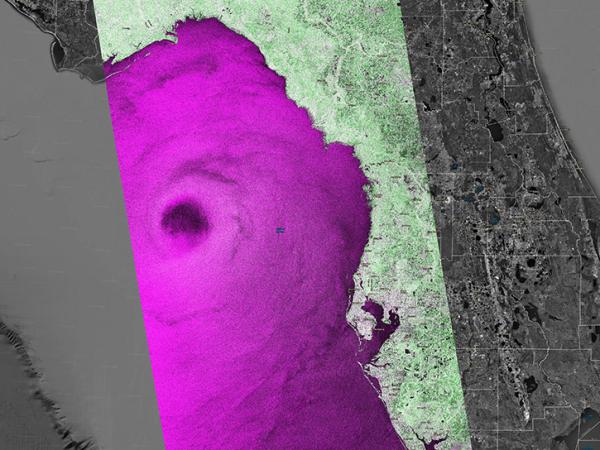
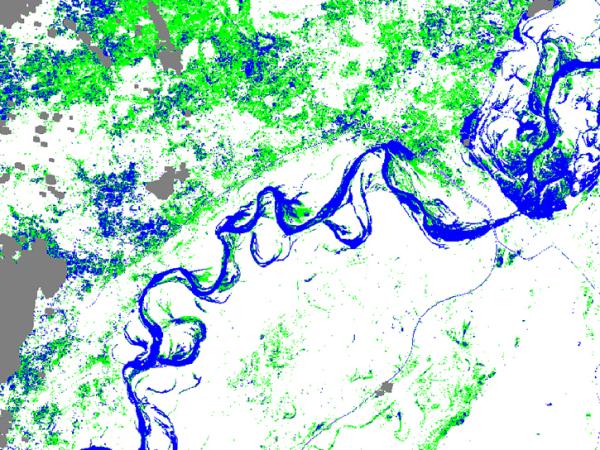
image of OPERA mapping over Earth
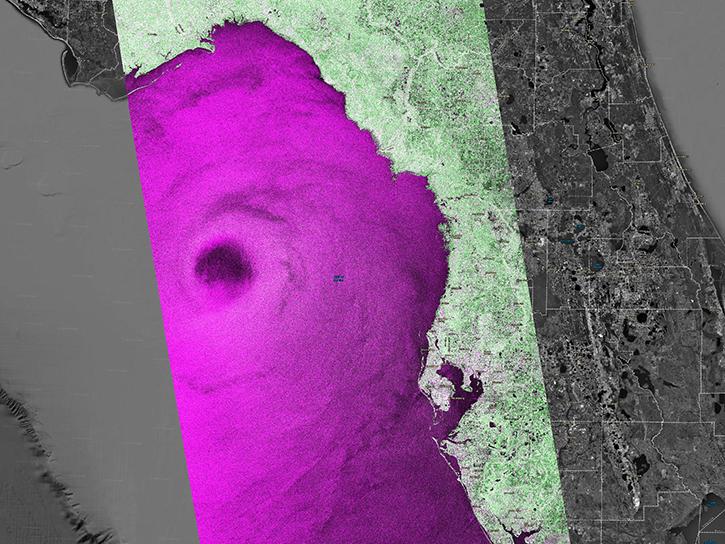
image of Hurricane Helene using OPERA
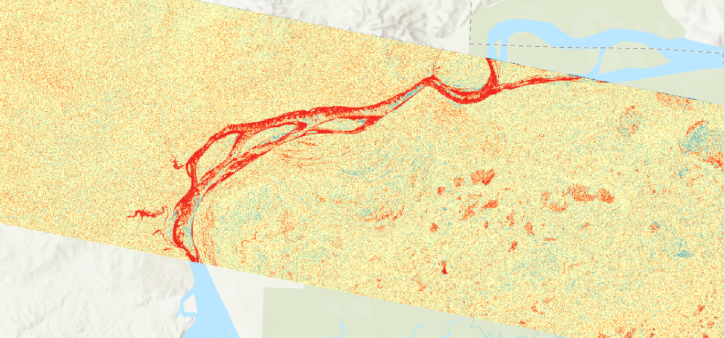
image of waterways using OPERA

OPERA

Observational Products for End-Users from Remote Sensing Analysis

NASA's Observational Products for End-Users from Remote Sensing Analysis (OPERA) project located at the Jet Propulsion Laboratory generates data products that help scientists understand key areas in Earth systems.

OPERA's focus areas include surface water extent, surface disturbance, surface displacement, and vertical land motion. These were selected in response to needs identified by the Satellite Needs Working Group (SNWG) in 2018 and 2020.

Learn more about OPERA's data products, workshops, and mission.

Data Centers

PO.DAAC
ASF DAAC
LP DAAC

OPERA Level-2 SAR Data Products


Coregistered Single-Look Complex from Sentinel-1 (CSLC-S1)

  • Data Center: ASF DAAC
  • Spatial Extent: USA and U.S. Territories, Canada within 200 km of the U.S. border, and all mainland countries from the southern U.S. border down to and including Panama
  • DOI (product description): 10.5067/SNWG/OPERA_L2_CSLC-S1_V1

Coregistered Single-Look Complex from Sentinel-1 Static Layers (CSLC-S1-STATIC)

Radiometric Terrain-Corrected from Sentinel-1 (RTC-S1)

Radiometric Terrain-Corrected SAR from Sentinel-1 Static Layers (RTC-S1-STATIC)


OPERA Level-3 SAR and Optical Data Products


Surface Displacement from Sentinel-1 (DISP-S1)

  • Data Center: ASF DAAC
  • Spatial Extent: USA and U.S. Territories, Canada within 200 km of the U.S. border, and all mainland countries from the southern U.S. border down to and including Panama
  • DOI (product description): 10.5067/SNWG/OPL3DISPS1-V1

Dynamic Surface Water eXtent (DSWx)

Surface Disturbance (DIST)


Related OPERA Project Data Products


OPERA Tropospheric Correction at Zenith validated product (Version 1)


ProductDocument / fileDescriptionFormatDownload

CSLC-S1

Product Specification DocumentSpecifications of the OPERA Level-2 Coregistered Single-Look Complex (CSLC) product that uses Sentinel-1 SLC products as the primary image-based input. Accordingly, this data product is referred to by the short name CSLC-S1..pdfCSLC-S1 Product Specification document
CSLC-S1Algorithm Theoretical Basis Document (ATBD)Provides an in-depth description of the algorithm employed for generating OPERA’s L2_CSLC_S1 products. Subsequent sections describe the algorithm’s implementation, its underlying mathematical assumptions, their implications on data quality, and relative and absolute geolocation accuracy. Furthermore, the document delves into the algorithm’s input data and the output products generated by the CSLC-S1 algorithm..pdfCSLC-S1 ATBD
CSLC-S1-STATICProduct Specification DocumentSpecifications of the OPERA Level-2 Radiometric Terrain-Corrected SAR Backscatter from Sentinel-1 (CSLC-S1) Static Layers (CSLC-S1-STATIC) product. It is distributed separately from the CSLC-S1 products, and it is only produced once (or a limited amount of times) for CSLC-S1 products characterized by the same burst identification string, i.e., for all the Sentinel-1 bursts covering the same geographical area on the ground. The CSLC-S1-STATIC contains both data raster layers (e.g., geocoded geometry layers) and product metadata..pdfCSLC-S1-Static Product Specification document
RTC-S1Algorithm Theoretical Basis Document (ATBD)Provides the theoretical basis for the algorithms used to create the OPERA RTC-S1 product. The product is derived from Copernicus Sentinel-1 (S1) SAR data, provided by the European Space Agency (ESA). The OPERA Algorithm Development Team (ADT) implements these algorithms in the Science Algorithm Software (SAS) and provides the SAS to the OPERA Science Data System (SDS) for the generation of OPERA RTC-S1 products..pdfRTC-S1 ATBD

RTC-S1

Product Specification DocumentDescribes the specifications of the OPERA Level-2 Radiometric Terrain-Corrected (RTC) product that uses Sentinel-1 SLC data as the primary image-based input..pdfRTC-S1 Product Specification document 
RTC-S1 STATICProduct Specification DocumentThe describes the specifications of the OPERA Level-2 Radiometric Terrain-Corrected SAR Backscatter from Sentinel-1 (RTC-S1) Static Layers (RTC-S1-STATIC) product. The RTC-S1-STATIC product provides radar geometry layers, such as local incidence angle or incidence angle, that describe the Sentinel-1 acquisition geometry associated with the OPERA RTC-S1 products with the same burst ID..pdfRTC-S1-Static Product Specification document 

DISP-S1

Product Specification DocumentDescribes the specifications of the OPERA Level-3 Land-Surface Displacement (DISP) product from Sentinel-1 (S1). It is generated from a sequence of Level 2 CSLC products and is a high-quality InSAR-derived displacement product with reduced decorrelation noise using a hybrid Persistent Scatterer (PS) and Distributed Scatterer (DS) time series processing approach. The DISP-S1 product provides information on anthropogenic and natural changes on Earth's surface, such as subsidence, tectonics, and landslides..pdfDISP-S1 Product Specification document 

DISP-S1

Algorithm Theoretical Basis Document (ATBD)This document describes the processing chain used by the OPERA project to generate Level 3 Surface Displacement from Sentinel-1 (DISP-S1) products..pdfDISP-S1 ATBD

Ancillary products used for the OPERA Project


CSLC

  • Digital Elevation Model (DEM)
    • The SAS uses a project-specified DEM for processing based on the Copernicus 30-meter DEM (GLO-30). The DEM is the same as that prepared for the NASA-ISRO Synthetic Aperture Radar mission, referred to as the NISAR-DEM.
    • Location: s3://opera-dem/v1.1/EPSG4326/*  (863 GB)
  • Ionosphere TEC Map
    • The ionosphere TEC maps are products distributed by the International GNSS Service (IGS) and contain daily information on the spatial distribution of the Vertical Total Electron Content (VTEC) characterizing the Earth's ionosphere.
    • Location: https://cddis.nasa.gov/archive/gnss/products/ionex/  (< 1 MB)
      • File patterns including: jplg1210.22i, JPL0OPSFIN_, and JPL0OPSRAP_
  • Orbit Ephemerides
    • The S1-A/B/C orbit ephemerides files contain information on the S1-A/B/C satellite position, velocity, and acceleration recorded by a Global Navigation Satellite System (GNSS) during the sensor acquisition.
      • S1-A/B/C orbit ephemerides files are available as:
        • Precise Orbit Ephemerides (POE): delivered within 20 days after the S1-A/B/C data acquisition and exhibiting less than 5 cm accuracy.
        • Restituted Orbit Ephemerides (ROE): delivered within 3 hours after the S1-A/B/C acquisition and exhibiting less than 10 cm accuracy.
      • Location: https://dataspace.copernicus.eu/
  • Burst Database
    • The burst database is a SQLite file generated by the OPERA ADT containing relevant information on the bursts acquired worldwide throughout the duration of the Sentinel-1 mission.
      • The use of the burst database during the production of L2_CSLC_S1 products guarantees that a time-series of L2_CSLC_S1 products characterized by the same burst ID shares the same geographical grid; i.e., they can be differenced pixel-wise.
    • Location: s3://opera-burstdb/burst_db_0.2.0_230831-bbox-only.sqlite  (50 MB)


RTC

  • Digital Elevation Model (DEM)
    • The SAS uses a project-specified DEM for processing based on the Copernicus 30-meter DEM (GLO-30). The DEM is the same as that prepared for the NASA-ISRO Synthetic Aperture Radar mission, referred to as the NISAR-DEM.
    • Location:  s3://opera-dem/v1.1/EPSG4326/*  (863 GB)
  • Orbit Ephemerides
    • The S1-A/B/C orbit ephemerides files contain information on the S1-A/B/C satellite position, velocity, and acceleration recorded by a Global Navigation Satellite System (GNSS) during the sensor acquisition.
      • S1-A/B/C orbit ephemerides files are available as:
        • Precise Orbit Ephemerides (POE): delivered within 20 days after the S1-A/B/C data acquisition and exhibiting less than 5 cm accuracy.
        • Restituted Orbit Ephemerides (ROE): delivered within 3 hours after the S1-A/B/C acquisition and exhibiting less than 10 cm accuracy.
      • Location: https://dataspace.copernicus.eu/
  • Burst Database
    • The burst database is a SQLite file generated by the OPERA ADT containing relevant information on the bursts acquired worldwide throughout the duration of the Sentinel-1 mission.
      • The use of the burst database during the production of L2_CSLC_S1 products guarantees that a time-series of L2_CSLC_S1 products characterized by the same burst ID shares the same geographical grid, i.e., they can be differenced pixel-wise.
    • Location: s3://opera-burstdb/burst_db_0.2.0_230831-bbox-only.sqlite  (50 MB)


DISP-S1

  • Static Layers Files
    • Static layers produced by the CSLC-S1 SAS, which describe the radar geometry of the input SLCs. Each input burst of the displacement frame has its own geometry input file.
    • Location:  ASF DAAC
  • Water Mask
    • A binary mask marking areas of bad data/no data (for example, ocean areas and regions of radar shadow).
    • Location:
      • s3://opera-water-mask/v0.3/EPSG4326.vrt
      • s3://opera-water-mask/v0.3/EPSG4326/*
  • Ionosphere TEC Map
    • The ionosphere TEC maps are products distributed by the International GNSS Service (IGS) and contain daily information on the spatial distribution of the Vertical Total Electron Content (VTEC) characterizing the Earth's ionosphere.
    • Location: https://cddis.nasa.gov/archive/gnss/products/ionex/  (<1 MB)
      • File patterns including: jplg1210.22i, JPL0OPSFIN_, and JPL0OPSRAP_
  • Frame to Burst Database
    • A static JSON file mapping DISP frames to the set of Sentinel-1 bursts that comprise the frame.
    • Location:  s3://opera-ancillaries/disp_frames/disp-s1/0.5.10/opera-s1-disp-0.9.0-frame-to-burst.json.zip  (4 MB)
  • Frame Reference Dates File
    • A static JSON file mapping DISP frames to the dates of CSLC products that should be staged as a time series for historical processing.
    • Location:  s3://opera-ancillaries/disp_frames/disp-s1/0.5.10/opera-disp-s1-reference-dates-2025-02-13.json  (30 MB)
  • Algorithm Parameters
    • The SAS uses a YAML file to read the algorithm parameters to run the DISP-S1 algorithm. There will be separate configuration files for both forward and historical processing modes.
    • Location:  s3://opera-ancillaries/algorithm_parameters/disp_s1/0.5.10/algorithm_parameters_historical_20250701.yaml  (12 KB)
  • Algorithm Parameter Overrides
    • A static JSON file mapping DISP frames to a number of algorithms parameter “overrides” that the SAS uses to perform per-frame tailoring of the algorithm parameters provided in the YAML config.
    • Location:  s3://opera-ancillaries/algorithm_parameters/disp_s1/0.5.10/opera-disp-s1-algorithm-parameters-overrides-2025-06-17.json  (12 KB)