






ACCESS NASA EARTH SCIENCE DATA

NASA's data policy ensures that all NASA data are available fully, openly, and without restrictions. Here's what this means to you.

LATEST ARTICLES

Clear view of Iceland

Image captured on 26 June 2021, by the MODIS instrument, aboard the Aqua satellite.

Data User Profile: Dr. Kyla Drushka

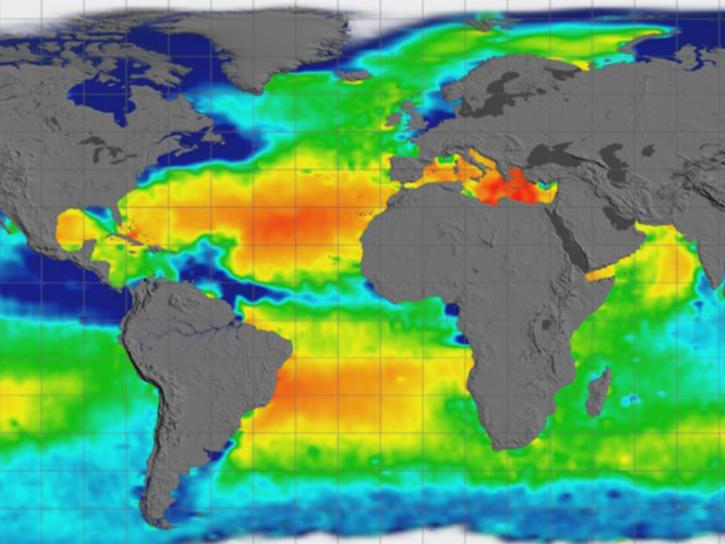
Salinity data from NASA’s PO.DAAC helps Dr. Kyla Drushka investigate how variations in sea surface salinity affect the circulation and structure of the ocean.

Mapping Lyme Disease Risk from Space

Researchers used field and remote sensing data to map the spread of ticks carrying Lyme disease bacteria in central and eastern Canada.

Dust in the Machine

Applying machine learning (ML) and deep learning (DL) to satellite dust imagery is leading to more accurate detection and tracking of large-scale dust events.

Webinar: Powered Up Data—Getting to Know the Sub-Orbital Order Tool (SOOT) Power User Interface

Event Date: June 30, 2021

Join us to explore the Sub-Orbital Order Tool (SOOT) Power User Interface: a new tool released by NASA's Atmospheric Science Data Center (ASDC) designed to promote discovery and access of airborne and field campaign data for suborbital data research and analysis. SOOT’s first release includes access to data archived at the ASDC through a Power User Interface for experienced airborne data users and science teams.

GCMD Joins NASA's EOSDIS Earthdata Forum

NASA's Global Change Master Directory has joined the Earthdata Forum, NASA's interactive platform that gives data users the chance to communicate with and learn from experts.

New SEDAC Datasets Offer Global, Spatial Population and Urban Land Projections based on Shared Socioeconomic Pathways

SEDAC releases datasets showing how patterns of socioeconomic development in the era of climate change are likely to impact the spatial allocation of populations around the globe.

New Black Marble Nighttime Blue/Yellow Composite Product Makes Detecting Power Outages Easier

New data product from NASA’s LANCE will enhance first responders’ ability to determine whether changes in nighttime lights are the result of power outages or dense cloud cover

User Profile: Dr. Steve Bowman

Synthetic Aperture Radar (SAR) Data from NASA’s ASF DAAC helps scientists like Dr. Steve Bowman provide Utah’s citizens with timely scientific information about the state’s geologic hazards.

From Cow Manure to Landfills: Mapping Methane in California

The Methane Source Finder project mapped potential sources of methane in California and developed new technologies to make remote sensing data of methane emissions readily available.

Data Chat: Dr. Chelle Gentemann

Open science, open-source software, and cloud-based Big Data collections are changing how science is conducted and expanding the possibilities for what scientists can do with NASA data.

SpaceML: Rise of the Machine (Learning)

A global team is using artificial intelligence and machine learning to enable users to search for specific features in satellite imagery available through NASA’s Global Imagery Browse Services (GIBS).

Collaborate With Us

EOSDIS has several channels that allow collaboration with the scientific community, EOSDIS data holdings and directly with NASA.

  1. Welcome to Earthdata 3.0

    Enter your search term to search datasets, news, and articles.

  2. Science Disciplines

    Browse by science discipline to see available measurements and supporting DAACs.

  3. News & Events

    Click on one of these filters to see news & events specifically related to your selection.

  4. Collaborate

    Collaborate with us through our API & program access points.

  5. Feedback Module

    Have a question or comment? Send us your feedback and we'll get back to you as soon as we can.