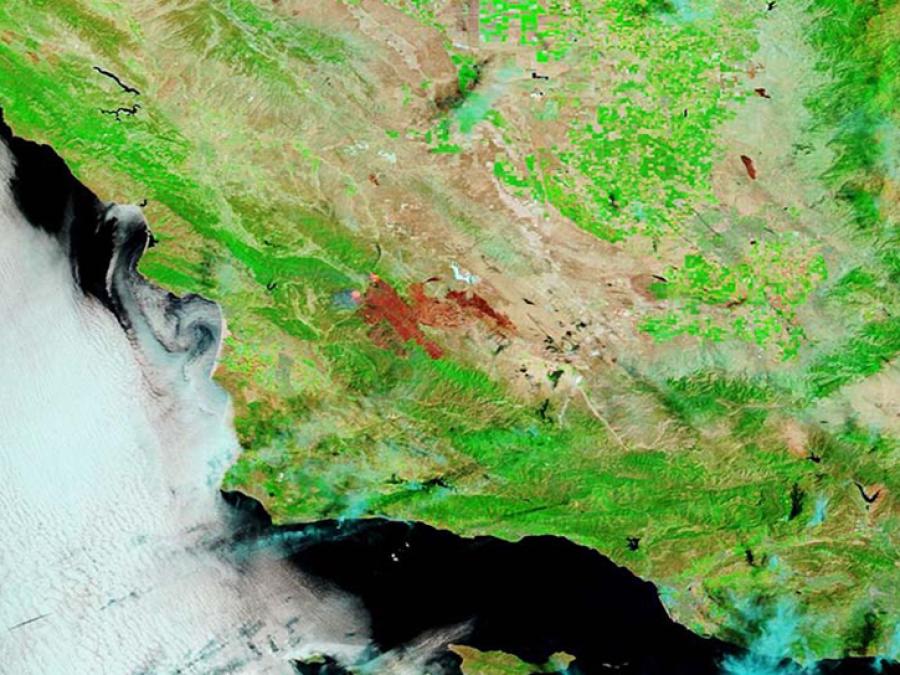
California fire data captured by MODIS
FireSense 2025 Spring campaign activities
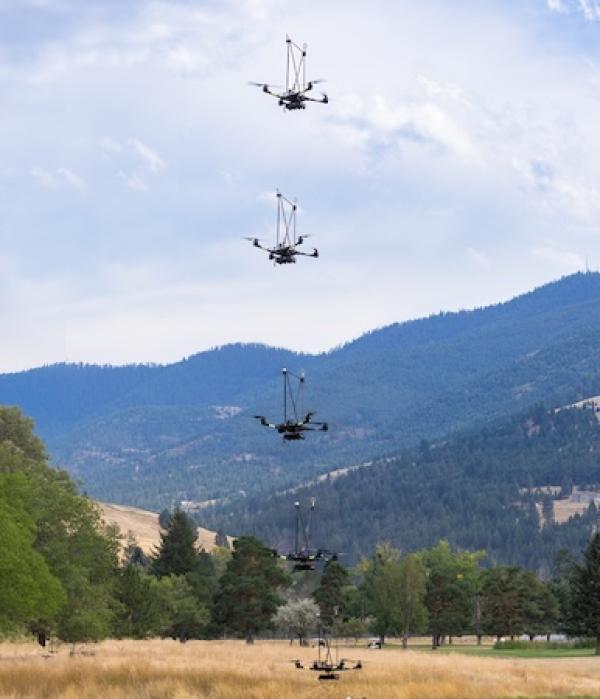
NASA Alta X quadcopter taking off during one of eight flights it performed for the 2024 FireSense uncrewed aerial system (UAS) technology demonstration in Missoula, Montana.

FireSense

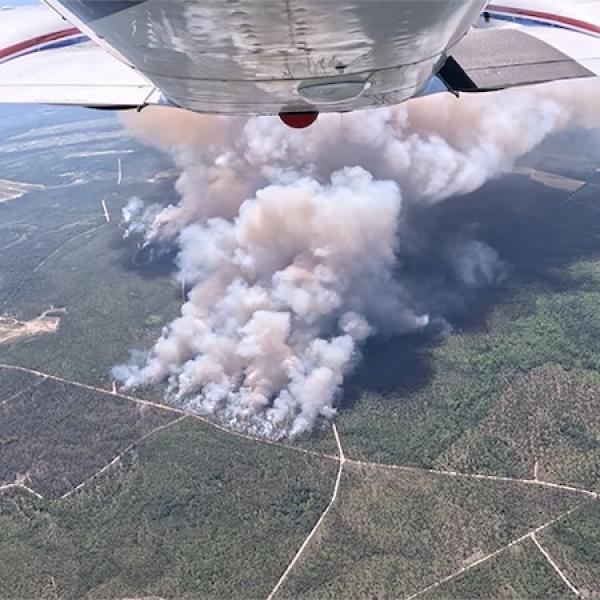
The FireSense project aims to improve U.S. wildland fire management by working with operational agencies to refine and deliver NASA’s unique Earth science and technological capabilities. FireSense focuses on four types of assessments to support decisions before, during, and after wildland fires: pre-fire fuel conditions, active fire dynamics, post-fire impacts and threats, and air quality forecasting. Each type of assessment is co-developed with wildland fire management stakeholders.

Through co-development of technology and data-informed tools, FireSense is intended to enable a transition from reactive to proactive fire response by facilitating increased preparedness for and co-existence with fire. To accomplish this, the FireSense team collaborates with resource managers, policymakers, and stakeholders at all levels. Since the fall of 2023, FireSense has run an annual airborne and field component where the project team tests and develops improved capabilities and technologies for transfer to stakeholders. 

FireSense leverages multiple airborne instruments, including the MODIS/ASTER Airborne Simulator (MASTER), the Uninhabited Aerial Vehicle Synthetic Aperture Radar (UAVSAR), the Airborne Visible/Infrared Imaging Spectrometer 3 (AVIRIS-3), the Scanning L-band Active Passive (SLAP), and the San Jose State University Wildfire Imaging System (SWIS).
Principal Investigator

Teresa Kauffman, Technology Program Manager

Data Centers

ORNL DAAC

Funding Programs

Earth Science Technology Office (ESTO)
Applied Sciences and Research and Analysis
Small Business Innovative Research (SBIR) program
Aeronautics Research Mission Directorate (ARMD)
Study DatesFall 2023 - Present
Season of StudyYear-round
RegionUnited States
Focus AreasAtmosphere
Biosphere
Scientific TopicsPre-fire fuel conditions
Active fire dynamics
Air quality and smoke transport
Post-fire hazards
Carbon emissions analysis
Technology development
PlatformInstrument(s)
B-200

Airborne Visible/Infrared Imaging Spectrometer - 3rd Generation (AVIRIS-3)

MODIS/ASTER Airborne Simulator (MASTER)

FireTIRS

Scanning L-band Active Passive (SLAP)

San Jose State University Wildfire Imaging System (SWIS)

Gulfstream IIIUninhabited Aerial Vehicle Synthetic Aperture Radar (UAVSAR)
Alta X UAVLI-COR TriSonica Sphere anemometer and Graw Radiosondes GmbH & Co
Trident Sensing Piper Twin ComancheTactical Fire Remote Sensing (TACFI-RS)
NASA SuperVolo UAVTactical Fire Remote Sensing (TACFI-RS)
NASA NEXOptiSAR Framework