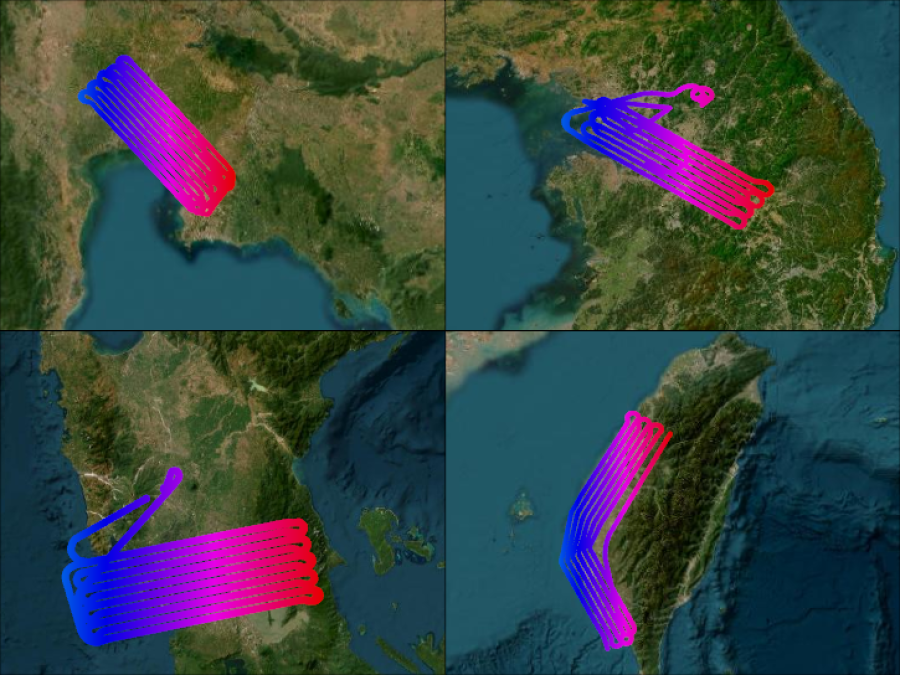
ASIA-AQ Flightpaths
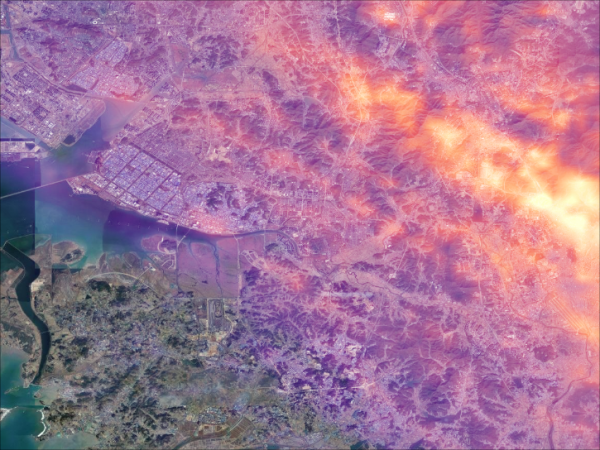
ASIA-AQ NO2 Data above Incheon, South Korea
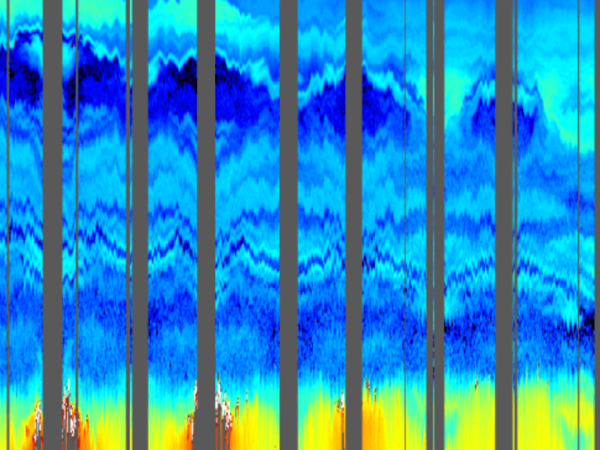
HSRL Data from ASIA-AQ

ASIA-AQ

Airborne and Satellite Investigation of Asian Air Quality

Data Centers

ASDC

The Airborne and Satellite Investigation of Asian Air Quality (ASIA-AQ) was an international cooperative field study designed to address local air quality challenges. Conducted from January-March 2024, ASIA-AQ deployed multiple aircraft to collect in situ and remote sensing measurements, along with numerous ground-based observations and modeling assessments. 

Data was collected over four countries including, the Philippines, Taiwan, South Korea, and Thailand and flights were conducted in full partnership with local scientists and environmental agencies responsible for air quality monitoring and assessment. One of the primary goals of ASIA-AQ was to contribute improving integration of satellite observations with existing air quality ground monitoring and modeling efforts across Asia. 

Air quality observations from satellites are evolving with new capabilities from South Korea’s Geostationary Environment Monitoring Spectrometer (GEMS), which conducts hourly measurements to provide a new view of air quality conditions from space that complements and depends upon ground-based monitoring efforts of countries in its field of view. ASIA-AQ science goals focused on satellite validation and interpretation, emissions quantification and verification, model evaluation, aerosol chemistry, and ozone chemistry.
  • Satellite Validation and Interpretation 
  • Emissions Quantification and Verification 
  • Model Evaluation 
  • Aerosol Chemistry 
  • Ozone Chemistry
PlatformsInstruments
NASA DC-8Computer
TRANSMISSION ELECTRON MICROSCOPY (TEM)
AEROSOL MASS SPECTROMETER (AMS)
Single Particle Soot Photometer Manufactured by Droplet Measurement Technologies (DMT SP2)
Scanning Mobility Particle Sizer (SMPS)
Aerodynamic Particle Sizer (APS)
TSI-3563 Nephelometer
Ultra-High Sensitivity Aerosol Spectrometer Manufactured by Droplet Measurement Technologies (DMT UHSAS)
CCN Counter
Cloud Droplet Probe (CDP)
Cloud Particle Spectrometer with Polarized Detection (CPSPD)
Cloud Particle Counter (CPC)
CCD-based Actinic Flux Spectroradiometer (CAFS)
Diode Laser Hygrometer developed by NASA LaRC (DLH)
Meteorological Measurement System (MMS)
Trace Organic Gas Analyzer (TOGA)
Whole Air Sampler (WAS)
Quantum Cascade Tunable Infrared Differential Absorption Spectrometer (QC-TILDAS)
Chemical Ionization Time-of-Flight Mass Spectrometer (CIT-ToF-CIMS)
Differential Absorption CO, CH4, N2O Measurements (DACOM)
CHEMILUMINESCENCE
Los Gatos Research CO/CO2/H2O Analyzer (LGR)
Airborne Cavity Enhanced Spectrometer (ACES)
Compact Airborne Nitrogen diOxide Experiment (CANOE)
Rapid Ozone Experiment (ROZE)
Proton Transfer Mass Spectrometer (PTR-MS)
In Situ Airborne Formaldehyde (ISAF)
LI-7000 Closed Path CO2/H2O Gas Analyzer
MIRO Multi-compound Gas Analyzer (MIRO MGA)
Open-Path Ammonia Laser Spectrometer (OPALS)
NASA G-IIIGeostationary Coastal and Air Pollution Event (GEO-CAPE) Airborne Simulator (GCAS)
High Spectral Resolution Lidar (HSRL-2)