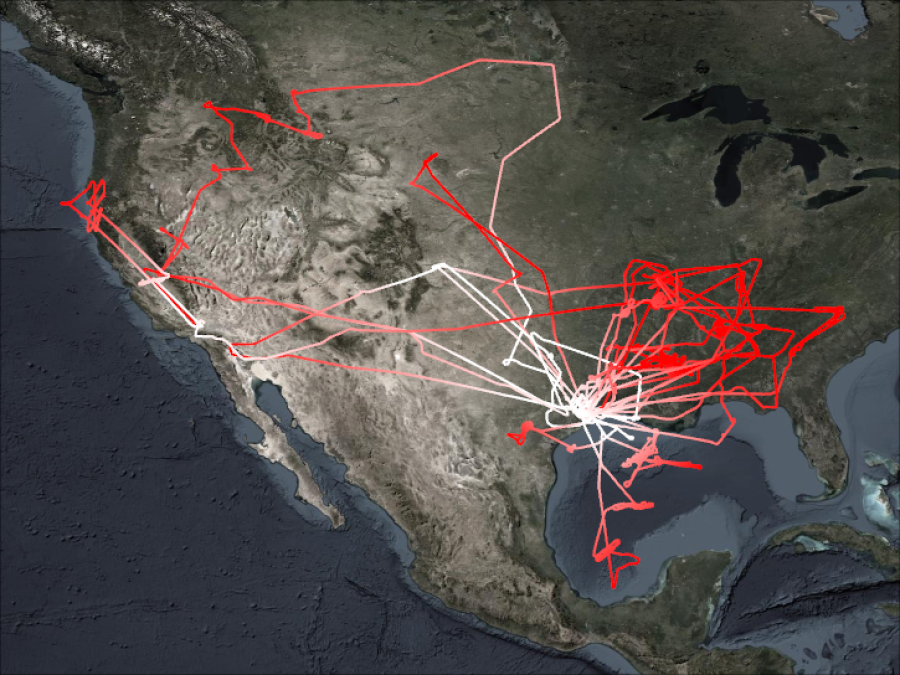
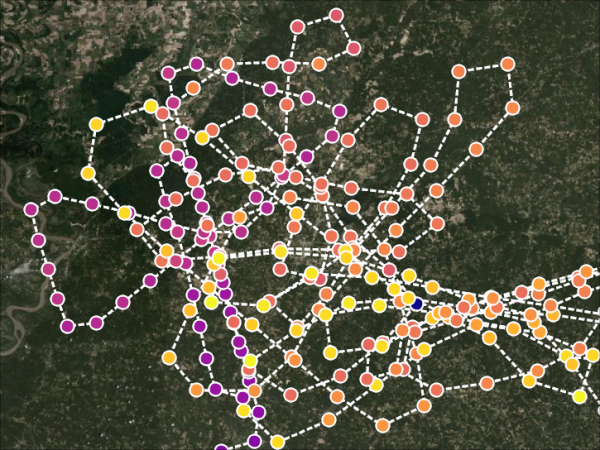
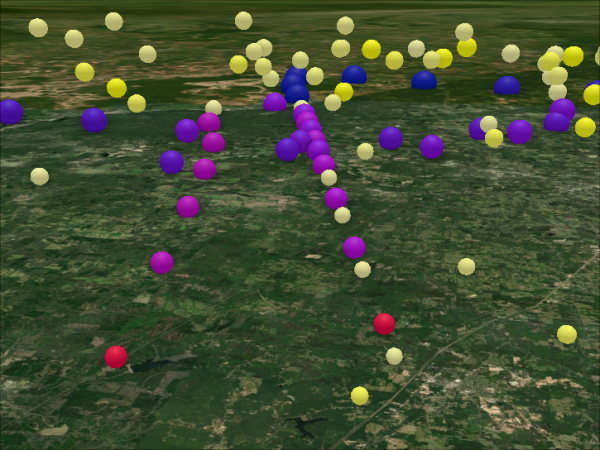
Studies of Emissions and Atmospheric Composition, Clouds and Climate Coupling by Regional Surveys (SEAC4RS) airborne field study was conducted in August and September of 2013. The field operation was based in Houston, Texas.
The airborne observational data were collected from three aircraft platforms: the NASA DC-8, ER-2, and SPEC LearJet. Both the NASA DC-8 and ER-2 aircraft were instrumented for comprehensive in-situ and remote sensing measurements of the trace gas, aerosol properties, and cloud properties. In addition, radiative fluxes and meteorological parameters were also recorded.
The NASA DC-8 was mostly responsible for tropospheric sampling, while the NASA ER-2 was operating in the lower stratospheric regime. The SPEC LearJet was dedicated to in-situ cloud characterizations.
To accomplish the science objectives, the flight plans were designed to investigate the influence of biomass burning and pollution, their temporal evolution, and ultimately, impacts on meteorological processes which can, in turn, feedback on regional air quality. With respect to meteorological feedbacks, the opportunity to examine the impact of polluting aerosols on cloud properties and dynamics was of particular interest.
For more information regarding the Airborne Multi-angle SpectroPolarimetric Imager (AirMSPI) data collected during SEAC4RS, please refer to: AirMSPI SEAC4RS Ellipsoid Data, and AirMSPI SEAC4RS Terrain Data.