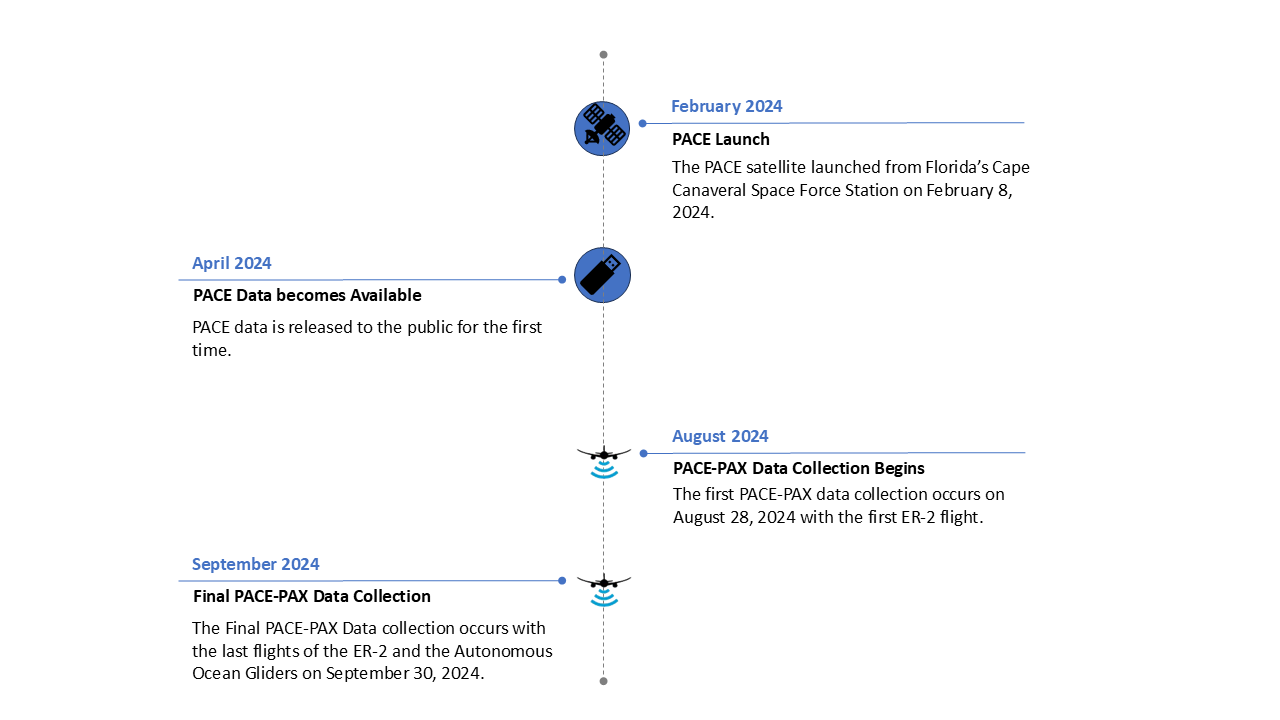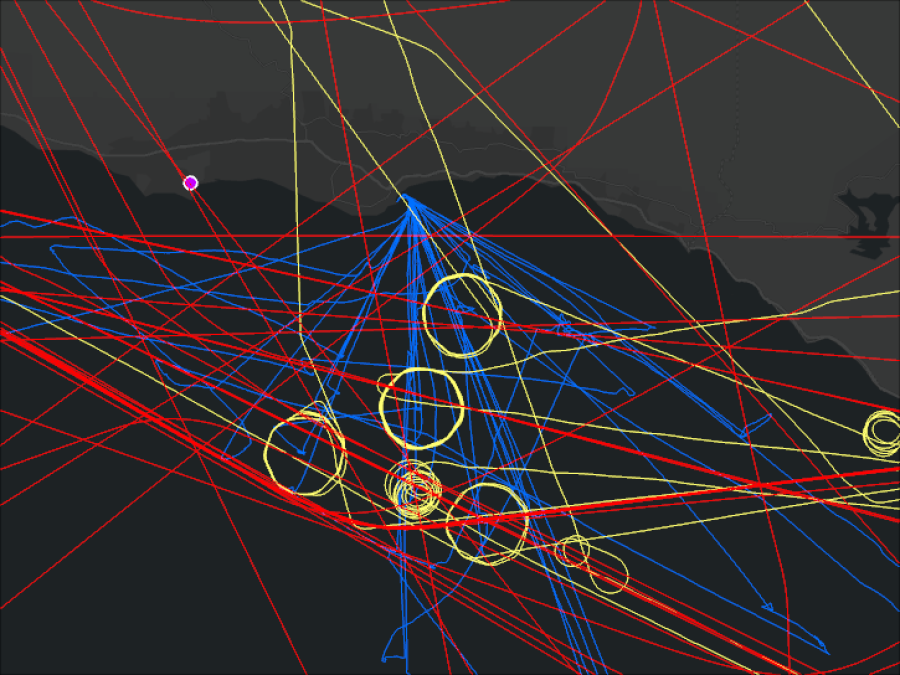
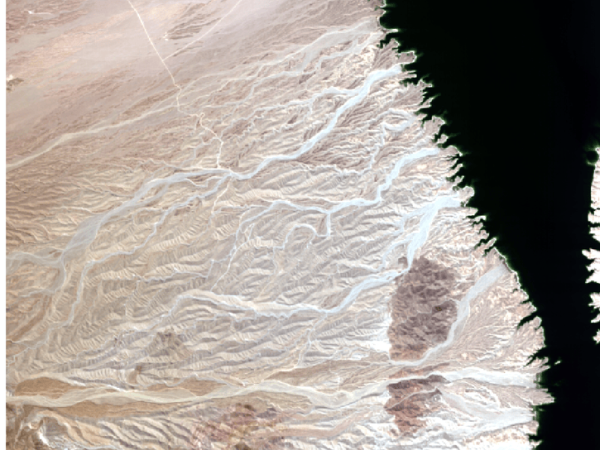
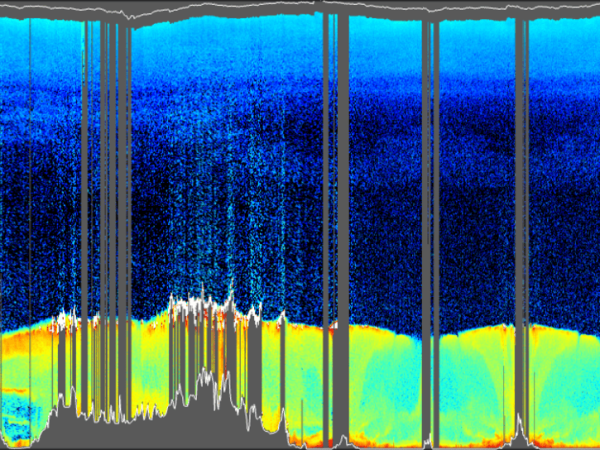
The Plankton, Aerosol, Cloud, ocean Ecosystem Postlaunch Airborne eXperiment (PACE-PAX) was conducted in September 2024 to gather data for the validation and refinement of data products generated by the PACE satellite mission. PACE-PAX obtained measurements over Southern and Central California and nearby coastal regions. Scheduled for roughly 9 months after the launch of PACE, sixty flight hours were planned for each of the two aircraft, NASA’s ER-2 high-altitude aircraft, and the CIRPAS Twin Otter aircraft (in situ sampling). Based out of their respective home airports (NASA Armstrong Flight Research Center for the ER-2 and Marina Municipal Airport for the Twin Otter), flights were coordinated between the two aircraft, PACE satellite overpasses, and ground and ocean-based observations. With a robust suite of in situ and remote sensing instruments, and ground-based observations, PACE-PAX validated and refined PACE data products and identified any potential errors or biases in the measurements, which is essential for ensuring the accuracy and reliability of the PACE data products and maximizing the scientific value of the mission. The following were validation objectives for PACE-PAX: Validate new retrieval parameters; Assess spatial and temporal scale impact on validation; Validate within the instrument swath of all PACE instruments; Validate radiometric and polarimetric properties; Target specific geometries, season, and time of day; and focus on specific processes or phenomena (e.g., high-aerosol loads over land and ocean, multiple aerosol layers).
For more meteorology resources supporting PACE-PAX, please visit the NASA-Ames Airborne Science Meteorological Support for PACE-PAX.