The Mid-latitude Airborne Cirrus Properties Experiment (MACPEX) was an airborne field campaign that deployed from March 18th to April 26th, 2011. MACPEX sought to investigate cirrus cloud properties and the processes that affect their impact on radiation.
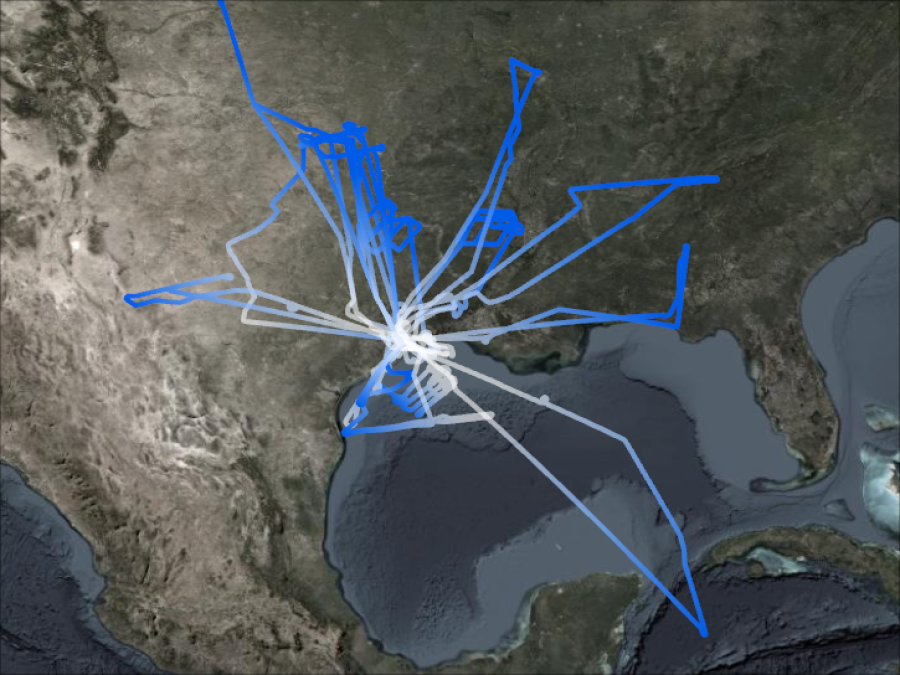
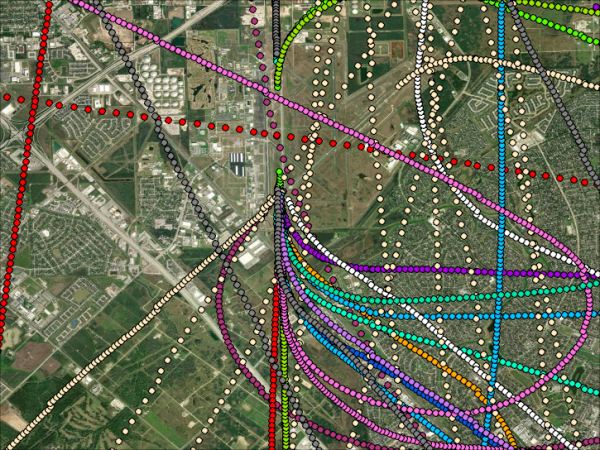
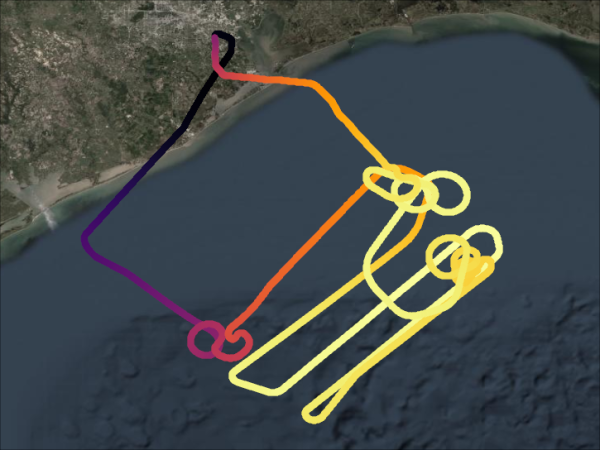
The campaign conducted science flights using the NASA WB-57 aircraft based out of Ellington Airfield, Texas. Science flights were focused on the central North America vicinity, with an emphasis over the Southern Great Plains atmospheric observatory (established by the Department of Energy’s (DoE) Atmospheric Radiation Measurement (ARM) user facility) site in Oklahoma. MACPEX was a joint effort between NASA, the NOAA Earth System Research Laboratory (ESRL), the National Center for Atmospheric Research (NCAR), and several U.S. universities.
The WB-57 contained a comprehensive instrument payload for detailed in-situ measurements that were targeted to answer MACPEX’s four major science questions. The first science question that MACPEX explored was how prevalent the smaller crystals are in cirrus clouds, and how important they are for extinction, radiative forcing, and radiative heating.
MACPEX also sought to understand how cirrus microphysical properties (particle size distribution, ice crystal habit, extinction, ice water content) are related to the dynamical forcing driving cloud formation. Researchers also investigated how cirrus microphysical properties are related to aerosol loading and composition, including the abundance of heterogeneous ice nuclei. Lastly, this campaign examined how cirrus microphysical properties evolve through the lifecycles of the clouds, and the role radiatively driven dynamical motions play.
In addition to the in-situ measurements, four flights were coordinated to validate the NASA EOS/A-Train satellite observations. NOAA also launched balloon sondes and ozonesondes, which were used to acquire data about the frost point and water vapor in the atmosphere. The balloon sondes and ozonesondes also acquired pressure, temperature, and humidity data, as well as measurements regarding the ozone in the atmosphere.