
The following information pertains to LMOS 2017:
Elevated spring and summertime ozone levels remain a challenge along the coast of Lake Michigan, with a number of monitors recording levels/amounts exceeding the 2015 National Ambient Air Quality Standards (NAAQS) for ozone. The production of ozone over Lake Michigan, combined with onshore daytime “lake breeze” airflow is believed to increase ozone concentrations at locations within a few kilometers off shore.
This observed lake-shore gradient motivated the Lake Michigan Ozone Study (LMOS). Conducted from May through June 2017, the goal of LMOS was to better understand ozone formation and transport around Lake Michigan; in particular, why ozone concentrations are generally highest along the lakeshore and drop off sharply inland and why ozone concentrations peak in rural areas far from major emission sources.
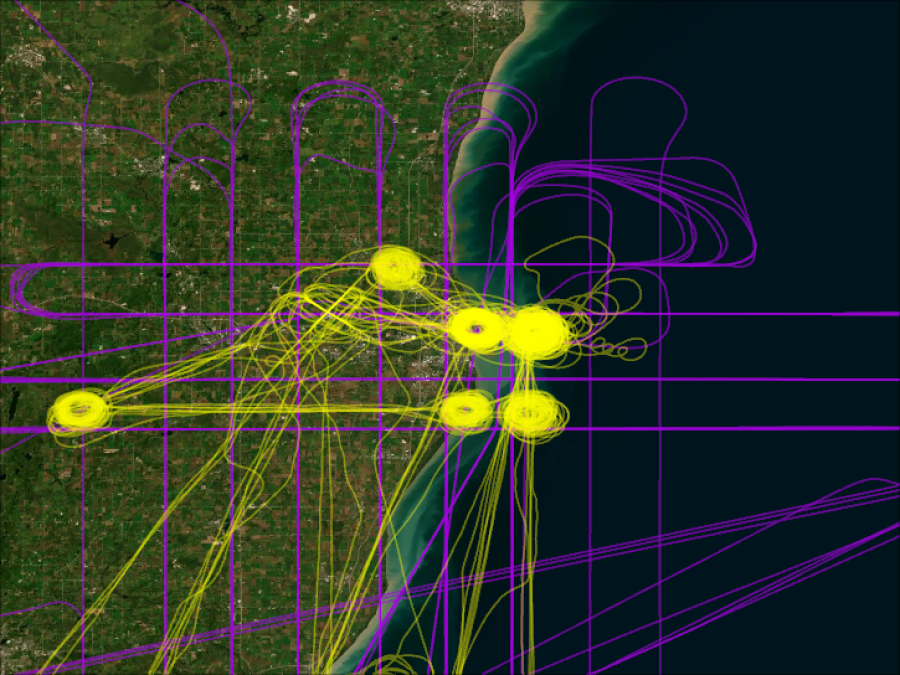
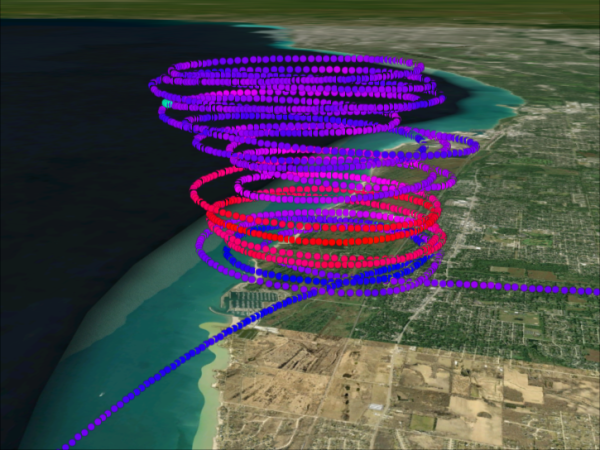
LMOS was a collaborative, multi-agency field study that provided extensive observational air quality and meteorology datasets through a combination of airborne, ship, mobile laboratories, and fixed ground-based observational platforms. Chemical transport models (CTMs) and meteorological forecast tools assisted in planning for day-to-day measurement strategies.
The long term goals of the LMOS field study were to improve modeled ozone forecasts for this region, better understand ozone formation and transport around Lake Michigan, provide a better understanding of the lakeshore gradient in ozone concentrations (which could influence how the Environmental Protection Agency (EPA) addresses future regional ozone issues), and provide improved knowledge of how emissions influence ozone formation in the region.