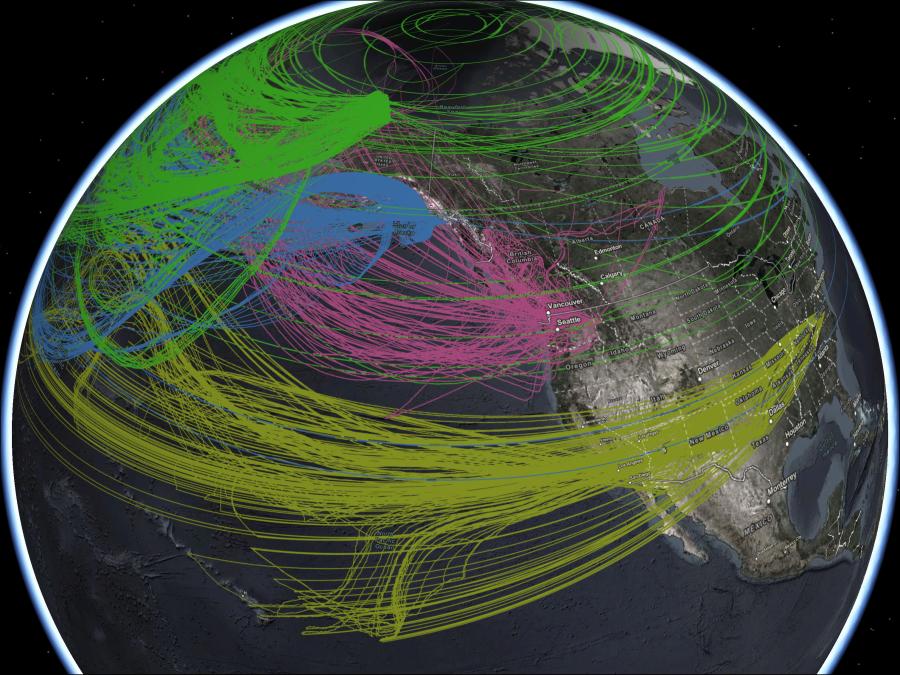
Global image of ARCTAS trajectory data from the B-200 aircraft with green, blue, yellow, and pink swaths showing trajectory paths along the northern hemisphere on a globe
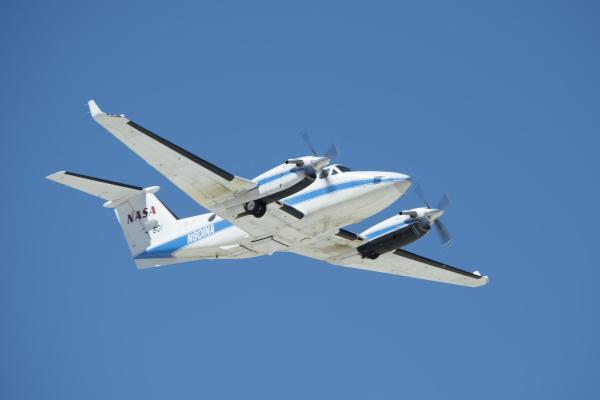
The NASA Beechcraft B200 King Air aircraft in flight
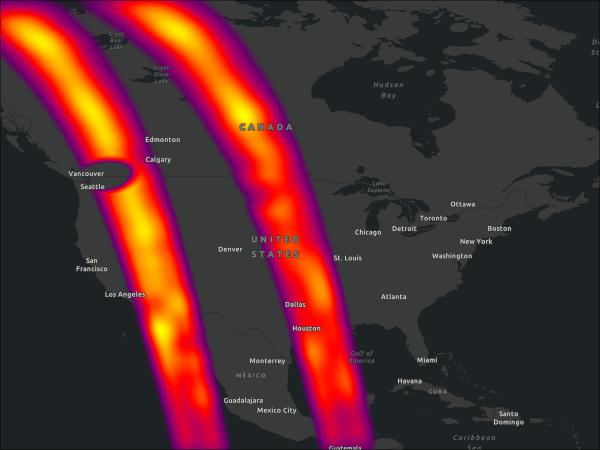
Two satellite swaths from the ARCTAS campaign showing ozone values in the area

ARCTAS

Arctic Research of the Composition of the Troposphere from Aircraft & Satellites

Data Centers

ASDC

The Arctic is a critical region in understanding climate change. The responses of the Arctic to environmental perturbations such as warming, pollution, and emissions from forest fires in boreal Eurasia and North America include key processes such as the melting of ice sheets and permafrost, a decrease in snow albedo, and the deposition of halogen radical chemistry from sea salt aerosols to ice. Arctic Research of the Composition of the Troposphere from Aircraft and Satellites (ARCTAS) was a field campaign that explored environmental processes related to the high degree of climate sensitivity in the Arctic. 

ARCTAS was part of NASA’s contribution to the International Global Atmospheric Chemistry (IGAC) Polar Study using Aircraft, Remote Sensing, Surface Measurements, and Models of Climate, Chemistry, Aerosols, and Transport (POLARCAT) Experiment for the International Polar Year 2007-2008.

ARCTAS had four primary objectives. The first was to understand long-range transport of pollution to the Arctic. Pollution brought to the Arctic from northern mid-latitude continents has environmental consequences, such as modifying regional and global climate and affecting the ozone budget. Prior to ARCTAS, these pathways remained largely uncertain. 

The second objective was to understand the atmospheric composition and climate implications of boreal forest fires; the smoke emissions from which act as an atmospheric perturbation to the Arctic by impacting the radiation budget and cloud processes and contributing to the production of tropospheric ozone. 

The third objective was to understand aerosol radiative forcing from climate perturbations, as the Arctic is an important place for understanding radiative forcing due to the rapid pace of climate change in the region and its unique radiative environment. 

The fourth objective of ARCTAS was to understand chemical processes with a focus on ozone, aerosols, mercury, and halogens. Additionally, ARCTAS sought to develop capabilities for incorporating data from aircraft and satellites related to pollution and related environmental perturbations in the Arctic into earth science models, expanding the potential for those models to predict future environmental change.

ARCTAS consisted of two, three-week aircraft deployments conducted in April and July 2008. The spring deployment sought to explore arctic haze, stratosphere-troposphere exchange, and sunrise photochemistry. April was chosen for the deployment phase due to historically being the peak in the seasonal accumulation of pollution from northern mid-latitude continents in the Arctic. The summer deployment sought to understand boreal forest fires at their most active seasonal phase in addition to stratosphere-troposphere exchange and summertime photochemistry.

During ARCTAS, three NASA aircrafts, the DC-8, P-3B, and BE-200, conducted measurements and were equipped with suites of in-situ and remote sensing instrumentation. Airborne data was used in conjunction with satellite observations from AURA, AQUA, CloudSat, PARASOL, CALIPSO, and MISR

The ASDC houses ARCTAS aircraft data, along with data related to MISR, a satellite instrument aboard the Terra satellite which provides measurements that provide information about the Earth’s environment and climate.

  • Understand long-range transport of pollution to the Arctic.
  • Understand the atmospheric composition and climate implications of boreal forest fires.
  • Understand aerosol radiative forcing from climate perturbations.
  • Understand chemical processes with a focus on ozone, aerosols, mercury, and halogens.
  • Develop capabilities for incorporating data from aircraft and satellites related to pollution and related environmental perturbations in the Arctic.
PlatformInstruments
Douglas DC-8 (DC-8)Cloud Aerosol and Precipitation Spectrometer (CAPS)
Particle Into Liquid Sampler (PILS)
Measurements of Atmospheric Carbon Dioxide Over Northwestern North America (MACDON-NA)
Spectrometer
Georgia Institute of Technology Chemical Ionization Mass Spectrometer (GT-CIMS)
LI-COR Gas Analyzer
Gas Chromatograph/Mass Spectrometry (GC-MS)
Generic-Atmospheric State (Gen-AtmsState)
Generic-Chemistry Related Sensors
Proton Transfer Mass Spectrometer (PTR-MS)
PANS CIMS Instrument by Georgia Tech and NCAR (PAN-CIGAR)
Trace Organic Gas Analyzer (TOGA)
Peroxy Radical Chemical Ionization Mass Spectrometer (PerCIMS)
Scanning Mobility Particle Sizer (SMPS)
Chemiluminescence Instrument (NOx/NOxy)
Airborne Tropospheric Hydrogen Oxide Sensor (ATHOS)
Thermal-Dissociation Laser Induced Fluorescence (TD-LIF)
Tunable Diode Laser Absorption Spectrometer (DFGAS)
Aerodynamic Particle Sizer (APS)
Condensation Nuclei Counter (CNC)
Differential Absorption Carbon monOxide Measurements (DACOM)
Differential Absorption Lidar (DIAL)
Diode Laser Hygrometer (DLH)
High Resolution-Aerosol Mass Spectrometer (HR-AMS)
Ultra-High Sensitivity Aerosol Spectrometer (UHSAS)
Particle Soot Absorption Photometer (PSAP)
Whole Air Sampler (WAS)
Nephelometer
Langley Aerosol Research Group Experiment (LARGE)
Aethalometer
California Institute of Technology Chemical Ionization Mass Spectrometer (CIT-CIMS)
Charged-coupled device (CCD) Actinic Flux Spectroradiometers (CAFS)
Single Particle Soot Photometer (SP2)
Soluble Acidic Gases and Aerosols (SAGA)
P-3 Orion (P-3)Differential Mobility Analyzer (DMA)
Spectrometer
Carbon monOxide by Attenuated Laser Transmission (COBALT)
Generic-Atmospheric State (Gen-AtmsState)
Generic-Chemistry Related Sensors (Gen-Chemistry)
Optical Particle Counter (OPC)
Condensation Particle Counter (CPC)
Cloud Absorption Radiometer (CAR)
Broadband Radiometer (BBR)
Solar Spectral Flux Radiometer (SSFR)
Aerodynamic Particle Sizer (APS)
Condensation Nuclei Counter (CNC)
Tandem Differential Mobility Analyzer (TDMA)
Particle Soot Absorption Photometer (PSAP)
Nephelometer
Thermo Scientific Gas Analyzer
Aethalometer
Airborne Tunable Laser Absorption Spectrometer (ATLAS)
Single Particle Soot Photometer (SP2)
Aerosol Mass Spectrometer (AMS)
Airborne Tracking Sun Photometer (ATSP)
Beechcraft B-200 King Air (B-200)Research Scanning Polarimeter (RSP)
High Spectral Resolution Lidar (HSRL)
BalloonsOzonesondes
Ground Station/Field SiteAerosol Robotic Network (AERONET)
Multi-Axis Differential Optical Absorption Spectrometer (MAX-DOAS)
University of Alaska Fairbanks Cloud Polarization Lidar (UAF CPL)