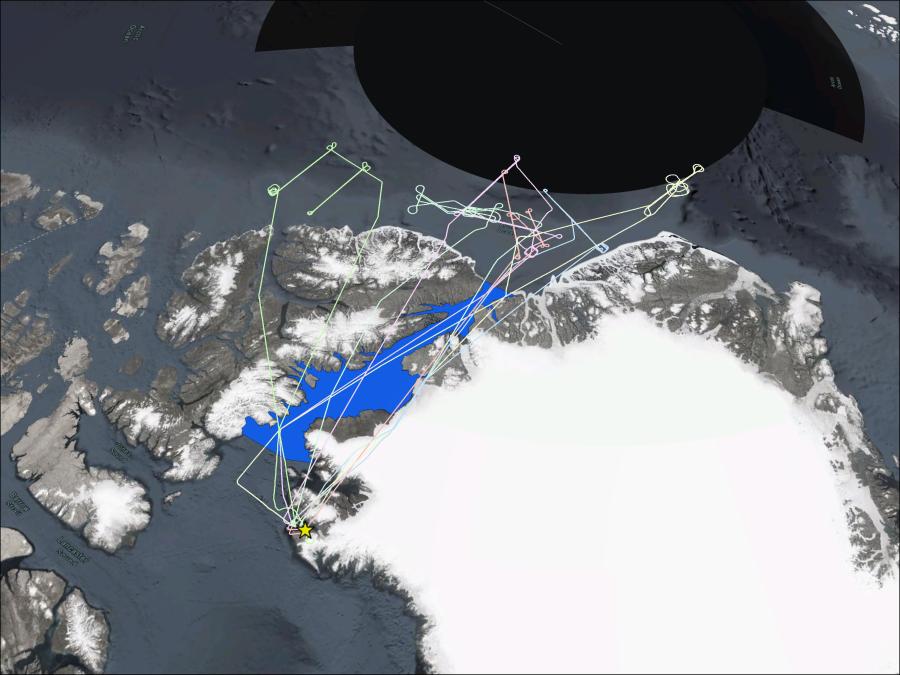
Image of six flight paths flying over the study region of ARCSIX which is highlighted in blue with the launch site labeled as a gold star.
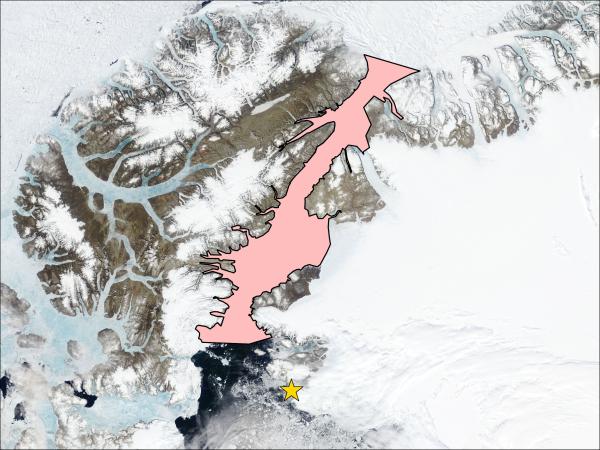
Satellite imagery over the Nares Strait with the Nares Strait colored in to highlight the ARCSIX study area. The Pitiffuk airbase is labeled with a star
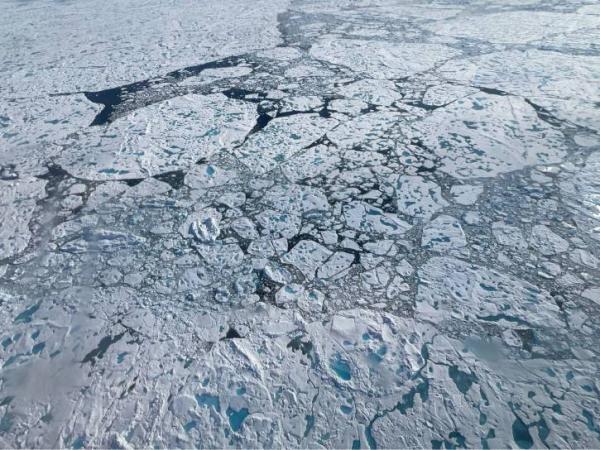
An image of the primary sea ice region of ARCSIX.

ARCSIX

Arctic Radiation-Cloud-Aerosol-Surface Interaction Experiment

Data Centers

ASDC

The Arctic Radiation-Cloud-Aerosol-Surface Interaction EXperiment (ARCSIX) is a NASA field investigation aimed at quantifying the contributions of surface properties, clouds, aerosol particles, and precipitation to the Arctic summer surface radiation budget and sea ice melt during the early melt season. 

Based out of Greenland, ARCSIX completed two deployments from May – June 2024 and July - August 2024 utilizing the NASA P-3B, LaRC G-III, and SPEC-Learjet aircraft. The P-3B was equipped with in situ and remote sensing payloads to acquire measurements of aerosols, cloud, and radiation properties. 

The high-flying LaRC G-III was equipped with remote sensing instrumentation, including the HALO, and HSRL, along with the AVAPS dropsonde system. The SPEC-Learjet acquired measurements of cloud microphysics. Data were also collected at the Thule High Arctic Atmospheric Observatory (THAAO) in Pituffik, Greenland. 

The primary objective of ARCSIX was to enhance long-term space-based monitoring and predictive capabilities of Arctic sea ice, cloud, and aerosols by validating and improving remote sensing algorithms and model parameterizations in the Arctic. ARCSIX science questions focused on examining the impact of the predominant summer Arctic cloud types on the radiative surface energy budget, what processes control the evolution and maintenance of the predominant cloud types in the summertime Arctic, and how do the two-way interactions between surface properties and atmospheric forcings affect sea ice evolution?

For information regarding external datasets collected during ARCSIX, please visit ARCSIX Collaborator Data .

  • Enhance long-term space-based monitoring and predictive capabilities of Arctic sea ice, cloud, and aerosols by validating and improving remote sensing algorithms and model parameterizations in the Arctic.
  • Examine the impact of the predominant summer Arctic cloud types on the radiative surface energy budget.
  • Determine what processes control the evolution and maintenance of the predominant cloud types in the summertime Arctic.
  • Determine how the two-way interactions between surface properties and atmospheric forcings affect sea ice evolution.

ARCSIX scientists collected data using a variety of platforms, including airborne, mobile, and ground-based. These measurements collected with the instruments on the platforms were used in conjunction with various satellite data. The following table goes briefly into the instruments and payloads used in ARCSIX:

PlatformInstruments
P-3 Orion (P-3)Differential Aerosol Sizing and Hygroscopicity Spectrometer Probe (DASH-SP)
Hyperspectral Radiometer (HSR1)
2B Technologies Ozone Monitor
Continuous Flow Diffusion Chamber (CFDC)
Multi-function Airborne Raman Lidar (MARLi)
Generic-Atmospheric State
Research Scanning Polarimeter (RSP)
Picarro Gas Analyzer
G-band Vapor Radiometer (GVR)
Condensation Particle Counter (CPC)
Cloud Particle Imager (CPI)
Broadband Radiometer (BBR)
High Volume Precipitation Spectrometer (HVPS)
Solar Spectral Flux Radiometer (SSFR)
Colorado State University Ice Spectrometer (IS)
Counterflow Virtual Impactor (CVI)
Pyrometer
Aerodynamic Particle Sizer (APS)
Condensation Nuclei Counter (CNC)
Fast Integrated Mobility Spectrometer (FIMS)
WCM-2000 Multi Element Water Content System (WCM-2000)
Differential Absorption Carbon monOxide Measurements (DACOM)
Nucleation-Mode Aerosol Size Spectrometer (NMASS)
Diode Laser Hygrometer (DLH)
Ultra-High Sensitivity Aerosols Spectrometer (UHSAS)
Fast Cloud Droplet Probe (FCDP)
Land, Vegetation, and Ice Sensors (LVIS)
Particle Soot Absorption Photometer (PSAP)
Nephelometer
Particles in the Upper Troposphere/Lower Stratosphere (PUTLS)
2D-Stero Particle Probe (2D-S)
Langley Aerosol Research Group Experiment (LARGE)
Single Particle Soot Photometer (SP2)
Aerosol Mass Spectrometer (AMS)
Printed Optical Particle Spectrometer (POPS)
Langley Research Center Gulfstream III (LaRC G-III)Airborne Visible InfraRed Imaging Spectrometer - Next Generation (AVIRIS-NG)
High Altitude Lidar Observatory (HALO)
High Spectral Resolution Lidar (HSRL)
Airborne Vertical Atmospheric Profiling System (AVAPS)
SPEC Inc. Learjet 25 (SPEC Learjet)Forward Scattering Spectrometer Probe (FSSP)
Fast Cloud Droplet Probe (FCDP)
2D-Stereo Particle Probe (2D-S)
High Volume Precipitation Spectrometer (HVPS)
Ka-band Probe Radar (KPR)
Generic-Atmospheric State (Gen-AtmsState)
Nevzorov Liquid Water Content and total Water Content Probe (Nevzorov Probe)
Ground SitesCeilometer
Generic-Atmospheric State (Gen-AtmsState)
Pyrometer
Generic-Radiometers
Sunphotometer
Aerosols Robotic Network (AERONET)
Micro Rain Radar (MRR)
BalloonsRadiosonde