
NASA’s Airborne Assessment of Hyperspectral Aerosol Optical Depth and Water-Leaving Reflectance (AirSHARP) observed the atmosphere and ocean along the Pacific Coast of the United States for the primary purpose of validating the Plankton, Aerosol, Cloud, ocean Ecosystem (PACE) satellite’s Ocean Color Instrument (OCI). In October 2024 and May 2025, AirSHARP conducted simultaneous airborne and seaborne campaigns to collect data under different environmental conditions, validating as much of OCI’s range as possible.
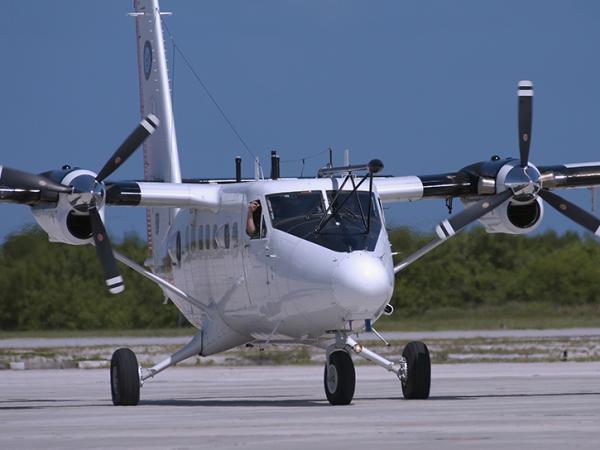
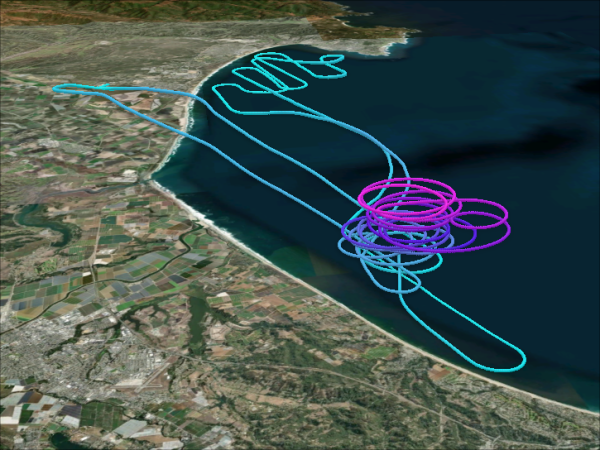
Across two deployments, 14 flights were conducted with the NPS CIRPAS Twin Otter Aircraft. The aircraft was equipped with facility instruments that measured meteorological and navigation parameters and with the Spectrometer for Sky-Scanning Sun-Tracking Atmospheric Research B (4STAR-B). An additional radiometer package, C-AIR (Coastal Airborne In-Situ Radiometers), was also flown aboard the Twin Otter during AirSHARP to sample the water-leaving radiances and remote sensing reflectances of Monterey Bay. Those data were archived in the SeaBass archive.
The overarching goal of both AirSHARP deployments was to assess water-leaving reflectance products for PACE OCI and hyperspectral aerosol optical depth to validate PACE's polarimeters.
Related reading - By Air and by Sea: Validating NASA’s PACE Ocean Color Instrument (June 26, 2025)