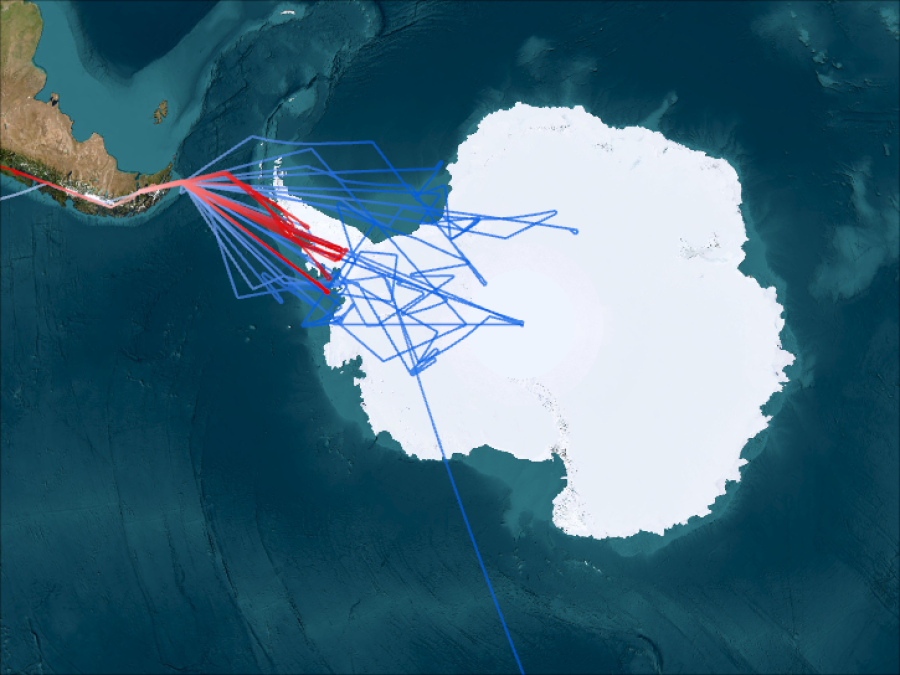
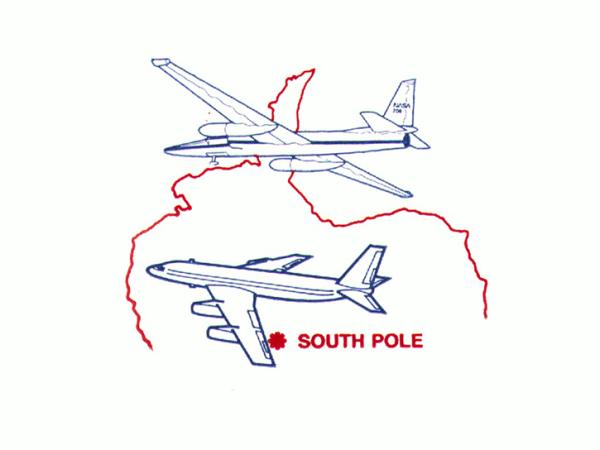
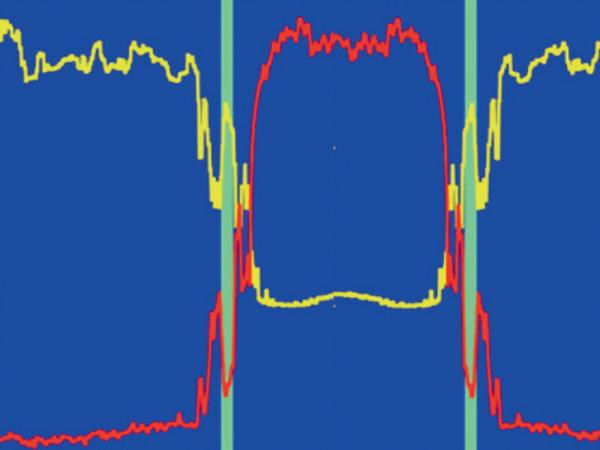
The main goal of AAOE was to perform a complex study of polar stratospheric clouds and their relation to the late winter and spring ozone loss over the Antarctic (the ozone hole). In order to collect the proper data to complete its objectives, AAOE utilized specially instrumented NASA ER-2 and DC-8 aircrafts.
The instruments on these aircrafts were used to acquire data on chemical meteorological, and cloud-physical parameters associated with this ozone loss phenomenon that was observed when this campaign was conducted. Along with the aircrafts, three separate satellite systems, ozone sondes, and ground-based sensors were employed in various locations in Antarctica to collect data.
The AAOE mission was conducted from August to October 1987 with flights based in Punta Arenas, Chile. The DC-8 aircraft was equipped with nine instruments for this campaign. A few of those instruments were the JPL Mark IV Balloon Interferometer (MkIV), the Differential Absorption Lidar (DIAL), the Whole Air Sampler (WAS (NCAR)), the in-situ ozone sampler from NASA Langley, and the NOAA Lyman-Alpha Total Water Hygrometer (NOAA TW).
The MkIV was responsible or taking various data points, including temperature and pressure. Along with these, the MkIV took measurements on the vertical column of a multitude of compounds including CO, H2O, NO, NO2, CH4, CO2, O3, and N2O in units of molecules/cm2.
The DIAL collected measurements of ozone mixing ratio in parts per billion by volume (ppbv), IR aerosol backscatter, IR atmospheric scattering ratio, visible (VIS) aerosol backscatter, and VIS atmospheric scattering ratio. The WAS (NCAR) was used to take measurements on whole air mixing ratio, which includes CH4, CO, and N2O in different concentrations. Finally, The NOAA TW onboard the DC-8 aircraft collected data sets on H2O mixing ratios in the atmosphere.
The ER-2 aircraft was equipped with 16 instruments, including the Multiple Axis Resonance Fluorescence Chemical Conversion Detector for ClO and BrO (ClO/BrO), the NOAA NOy Instrument (NOAA NOy), and the Airborne Tunable Laser Absorption Spectrometer (ATLAS). As its name suggests, the ClO/BrO was used to collect data on ClO and BrO mixing ratios.
The NOAA NOy collected measurements of NOy mixing ratio, while the ATLAS took measurements on N2O mixing ratio. Finally, balloon sondes were deployed with the responsibility of gathering data on atmospheric temperature, pressure, wind speed, wind direction, as well as ozone column data in various concentrations.
The Journal of Geophysical Research: Atmospheres, Volume 94, Issue D14 and Issue D9 has more information on the AAOE campaign.